
Keynote Speakers
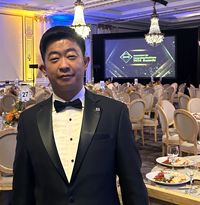
Prof. Zhu Han, John and Rebecca Moores Professor, ECE Department and CS Department, University of Houston, USA
Zhu Han received the B.S. degree in electronic engineering from Tsinghua University, in 1997, and the M.S. and Ph.D. degrees in electrical and computer engineering from the University of Maryland, College Park, in 1999 and 2003, respectively. From 2000 to 2002, he was an R&D Engineer of JDSU, Germantown, Maryland. From 2003 to 2006, he was a Research Associate at the University of Maryland. From 2006 to 2008, he was an assistant professor at Boise State University, Idaho. Currently, he is a John and Rebecca Moores Professor in the Electrical and Computer Engineering Department as well as the Computer Science Department at the University of Houston, Texas. Dr. Han is an NSF CAREER award recipient of 2010, and the winner of the 2021 IEEE Kiyo Tomiyasu Award. He has been an IEEE fellow since 2014, an AAAS fellow since 2020, ACM fellow since 2024, an IEEE Distinguished Lecturer from 2015 to 2018, and an ACM Distinguished Speaker from 2022-2025.
Speech Title: Generative AI for Wireless and Energy Systems: A Diffusion Model Perspective
Abstract: Diffusion models have rapidly evolved from image generators into a general framework for modeling complex data distributions. This talk presents three complementary directions that extend diffusion models beyond conventional generation and toward system-level intelligence. First, we revisit the reverse diffusion process through the lens of mean-field games, where denoising is reformulated as an optimal population-level transport problem between noise and data distributions. This perspective connects diffusion generation with controlled distribution evolution, saddle-point optimization, and coupled HJB–FPK dynamics. Second, we show how latent diffusion inpainting can reconstruct UAV radio maps from sparse and partial observations. By combining UAV-based sensing, spatio-temporal latent diffusion, and radio map reconstruction, diffusion models become a tool for recovering hidden wireless environments under limited coverage and dynamic sensing constraints. Third, we introduce socio-aware diffusion for residential load data generation, where social attributes guide controllable generation for disadvantaged or data-scarce communities. Through global-personalized multi-step diffusion and fairness-oriented adversarial training, the model generates realistic and diverse electricity-consumption patterns while improving downstream forecasting and reducing data imbalance. Together, these works highlight a broader view of diffusion models: not merely as sample generators, but as controllable and conditional for reasoning about evolving distributions in large-scale infrastructure systems, including wireless networks and smart grids.
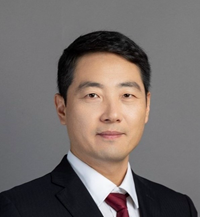
Prof. Kai Lu, Sun Yat-sen University, Guangzhou, China
Kai Lu received the B.Eng. and M.Eng. degrees from Harbin Institute of Technology, Harbin, China, in 2006 and 2008, respectively, and the Ph.D. degree from City University of Hong Kong (CityU), Hong Kong SAR, China, in 2012. He was a Postdoctoral Fellow at CityU from 2012 to 2014. From 2014 to 2015, he was a Visiting Scholar at Syracuse University, Syracuse, NY, USA. From 2016 to 2019, he was a Senior Antenna Engineer with Antenna Company, Eindhoven, the Netherlands. Since 2020, he has been with Sun Yat-sen University, Guangzhou, China, where he is currently an Associate Professor. His students received Best Student Paper Awards at the 2025 International Conference on Microwave and Millimeter Wave Technology (Xi'an) and the 2025 IEEE SZ/HK AP/MTT Postgraduate Conference (Shenzhen), a Best Paper Award at the 2026 Cross Strait Radio Science and Wireless Technology Conference (Harbin), and the First Prize in the National Final of the 10th IC-Innovation Challenge (2026). He served as Industry Co-Chair for the 2022 IEEE Conference on Antenna Measurements and Applications (Guangzhou) and as a Technical Program Committee Chair for the 2025 Cross Strait Radio Science and Wireless Technology Conference (Guangzhou). He is currently an Associate Editor of IEEE Open Journal of Antennas and Propagation and of IEEE Access.
Speech Title: Decoupling Multi-Antenna Systems with Dielectric Resonantors
Abstract: Mutual coupling between closely spaced antennas is a fundamental limitation in MIMO systems, in which spectral efficiency is gained by the use of multiple antennas at both ends of the link. As the element spacing is reduced below roughly half a wavelength, a rapid increase in the coupling between adjacent ports is observed, and the impedance match, the radiation efficiency, and ultimately the channel capacity are degraded. Most decoupling techniques reported to date rely on additional metallic structures—parasitic elements, defected ground planes, or neutralization lines—by which the complexity is increased and the antenna geometry itself is often constrained. In this talk, we show that mutual coupling can be controlled by dielectric resonators, which are employed here in a decoupling role rather than as the radiating element of the antenna. Radiation from these resonators is not eliminated; rather, it is the coupling path between antenna ports that is deliberately engineered through their resonant modes. A modal analysis of the dielectric resonator is first carried out, from which the interaction between its resonant modes and the fields of adjacent antenna elements is established. On the basis of this result, dielectric decouplers are designed by which mutual coupling is suppressed without any additional metallic structure and without restriction to a particular antenna type. Finally, we show that the same degrees of freedom can be exploited in the polarization and radiation pattern of the elements, which indicates a broader role for dielectric resonators in compact multi-antenna systems.
© Copyright 2018 – 2026 | by ICECE 2026 | All Rights Reserved.